What Football Injuries Feel Like: What Should You Watch For After a Hard Play?

You plant your foot at Smathers Beach and step back for a long pass, then the soft sand above the tide line gives way under you. Your shoulder turns, your leg twists, and the whole play changes in a second. What felt like a fun throw on packed sand now feels like something you will notice getting out of a car, lifting a bag, or trying to sleep tonight.
Football injuries can feel very different from one another, but the common thread is that they start changing your regular day fast, whether that means a sore thigh, a stunned shoulder and arm, or a hit that leaves your head feeling off. Jason Pirozzolo, DO, a sports medicine physician, puts it simply: "Most football injuries are not major, but they are worth paying attention to when they keep you from moving the way you normally do."
The injuries that show up most often
The football injuries people notice most often are bruises to the thigh, shoulder and arm injuries, and head injuries. Football has one of the highest injury rates among youth sports, and most football injuries are minor. A hard hit to the front of the thigh can cause a quadriceps contusion, meaning a deep muscle bruise, and that can leave you limping, avoiding stairs, and feeling the leg tighten up later in the day.
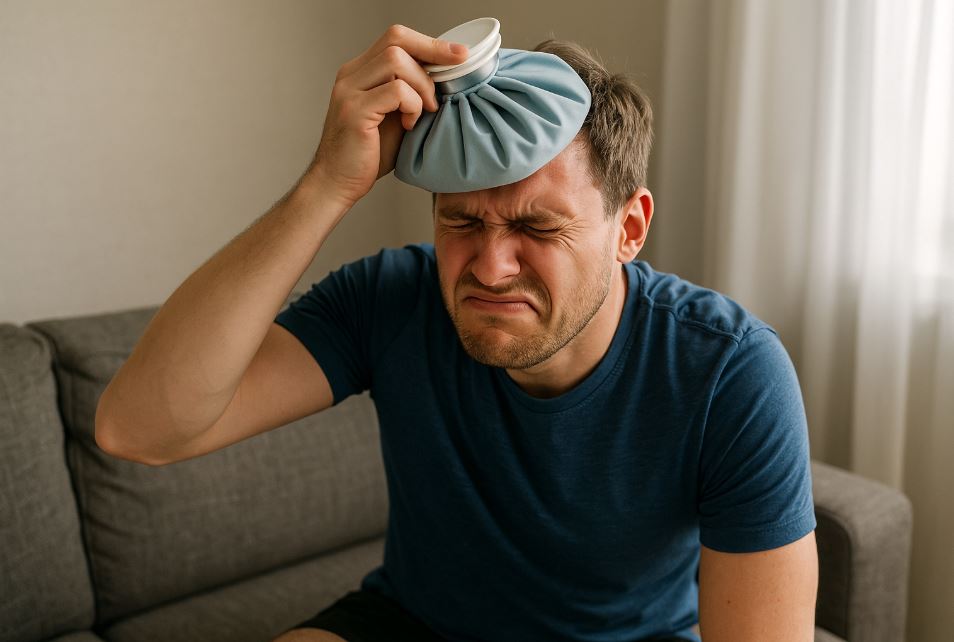
Another classic football problem is a stinger, meaning a brief nerve stretch injury around the shoulder and neck, which can send pain or tingling down the arm after contact. Concussion is also a common football concern, and it is usually less about one spot hurting than feeling off, slowed down, or not like yourself. "When someone tells me their arm burned right away, or their head just does not feel right afterward, that changes the conversation," Dr. Pirozzolo says. If that step back into the soft sand twisted your leg instead, your daily life may feel it first as trouble pivoting, squatting, or trusting that side when you turn.
When it is time to come in
Come in when the injury is still changing how you walk, lift, throw, turn, or sleep after the first stretch of rest at home, or when it keeps returning as soon as you try the activity again. "I tell people to pay attention to what the injury does to the rest of the day," Dr. Pirozzolo says. "If that low tide throw at Smathers Beach turns into a limp at dinner or pain every time you reach overhead, it is time to have it looked at."
Suspected concussion should be recognized and assessed with standardized tools, not brushed off as just having your bell rung. Early rest is a core part of concussion care, including both mental rest and physical rest. For knee injuries that raise concern for an ACL tear, meaning a torn stabilizing ligament in the knee, Dr. Pirozzolo often explains that strength and hop testing matter later because one common benchmark is for the injured leg to reach at least 90% of the other leg on hop testing before return to sport.
How to lower the odds next time
The best prevention steps in football are the plain ones that fit the sport. Helmets help reduce closed head and facial injuries, but they do not prevent neck injuries. Proper tackling technique matters, especially avoiding spearing, which is leading with the helmet into contact. "Good gear helps, but it does not replace good habits," Dr. Pirozzolo says. "Technique still matters, and so does knowing when your body is not ready for the next rep."
Before football or any beach throwing session, it helps to warm up the joints and muscles you are about to use, then build up your effort instead of jumping straight into full speed. For shoulder injuries, return testing after rehab often looks at side to side strength, upper body control, power, and movement quality before full sport drills. A few simple habits help most:
- Take 5 to 10 minutes to warm up before hard throwing or cutting.
- Build from easy throws and shorter routes before full speed passes.
- Stop for the day if pain changes your stride, your reach, or your grip.
- Give a sore area a day or two of relative rest before trying the same move again.
Functional imbalances can stick around after knee injuries even when an athlete feels ready, so objective testing matters before full return. "Feeling better is a good start, not the finish line," Dr. Pirozzolo says.
That missed step in the soft sand can leave you guessing later, especially when the real problem shows up in simple things like stairs, sleep, or carrying groceries. "Football injuries usually tell you what they are by what they interrupt," Dr. Pirozzolo says. If the same movement still feels wrong when you try it again, get it checked soon,
If that step back in the sand still has you limping, guarding your shoulder, or avoiding a throw tomorrow, contact Key West Concierge Orthopedics.
Questions About Football Injuries
What does a stinger usually feel like?
It often feels like a sudden burn, zing, or tingling from the shoulder down the arm after contact. It is usually brief, but it should still be checked if it keeps coming back or does not settle.
Can a thigh bruise from football really bother you for days?
Yes. A deep thigh bruise can tighten up after the first hit and keep affecting walking, stairs, and bending the knee later that day or the next morning.
Does a helmet prevent every serious football head or neck injury?
No. Helmets help reduce some head and facial injuries, but they do not prevent neck injuries, which is one reason tackling technique still matters.
Sources
- Shea K, Nilsson K. Youth Sports and Related Injuries. Textbook chapter, year not provided in excerpt.
- Youth Sports and Related Injuries. Textbook chapter, year not provided in excerpt.
- Patricios J, et al. Consensus statement on concussion in sport: the 6th International Conference on Concussion in Sport–Amsterdam, October 2022. Consensus statement, British Journal of Sports Medicine, 2023.
- Pediatric Orthopedics. Textbook chapter excerpt, year not provided in excerpt.
- Noyes FR, Barber SD, Mangine RE. Abnormal lower limb symmetry determined by function hop tests after anterior cruciate ligament rupture. Primary study summarized in textbook chapter, 1991.
- Rotator Cuff Injuries. Textbook chapter excerpt, year not provided in excerpt.
- Myer GD, et al. Utilization of modified NFL combine testing to identify functional deficits in athletes following ACL reconstruction. Primary study summarized in textbook chapter, 2011.
Medically reviewed by
Jason Pirozzolo, DO
Fellowship Trained and Board Certified in Sports Medicine
Last medically reviewed: October 12, 2026